
Miguel owns a hardware store in San Angelo. His store has always been the kind of place where customers expect personalized service. If a rancher needs fencing supplies delivered, Miguel tries to make it happen. If a contractor needs materials dropped at a job site, his team will load the truck and get it there. If a long-time customer buys a grill and cannot haul it home, someone from the store usually helps. This kind of service is part of why people keep coming back.
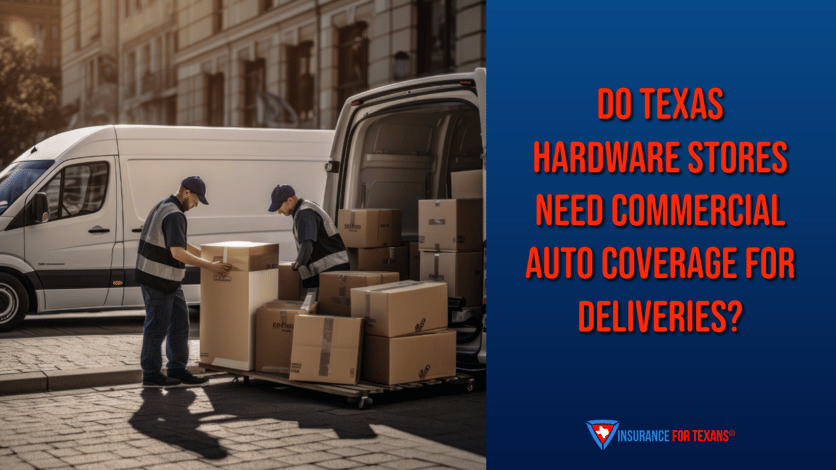
One Thursday afternoon, Miguel’s employee Sal loaded a store pickup with lumber and headed across town for a delivery. Nothing unusual. Just another normal day of taking care of customers. Everything was going as expected until suddenly a car stopped abruptly right in front of the truck Sal was driving. He hit the brakes to try and avoid a collision, but he wasn’t able to stop in time.
Thankfully, no one was hurt, but both the car and Sal’s truck were damaged in the collision. The driver of the car got out and saw how badly damaged his car was and got upset. He called the police to come to the scene of the accident. Sal called Miguel to ask him what he needed to do next.
Miguel knew that he had bought insurance for the truck, but he wasn’t completely sure what all it covered. He hoped that he had bought the right policy to cover this type of accident.
Hardware Store Deliveries Create Real Risk
Many hardware stores do more than sell products across the counter. Their employees are on the road making deliveries to customers. As the owner of the store, this changes your risk profile. Once an employee leaves your property with materials in the vehicle, your business risk is no longer limited to what happens inside the store. It is now moving down the road next to other drivers, pedestrians, customer vehicles, job sites, and private property.
A single accident can cause a huge expense for your business.
Vehicle accidents lead to property damage, injured people, legal expenses, delayed orders, lost work time, and frustrated customers. While your commercial general liability insurance will cover customer injuries that happen inside your store, it does not cover injuries caused by auto accident. You need commercial auto insurance for that. This is why delivery exposure needs to be reviewed before the accident happens, not after your employee is standing on the side of the road calling you.
What Does Commercial Auto Insurance Cover?
Commercial auto insurance is designed to cover vehicles used for business purposes.
For a hardware store, that may include:
- Delivery trucks
- Pickup trucks
- Box trucks
- Trailers
- Service vehicles
- Vehicles titled to the business
A commercial auto policy can include liability, physical damage and uninsured/underinsured motorist coverage. Most policies also include medical payments or personal injury protection. Commercial Auto Insurance primarily covers vehicle damage, property damage, and liability if the company vehicle or driver is at fault for hitting someone else. However, commercial auto policies often exclude or limit direct bodily injury coverage for the employee driving the vehicle if workers' compensation is required to respond
The most important thing to understand is that business vehicles need to be insured by a commercial auto policy. A personal auto policy is not designed to cover commercial vehicles.
What Is Hired and Non-Owned Auto Coverage?
Hired and non-owned auto coverage is one of the most misunderstood parts of business insurance.
- Hired autos: vehicles your business rents, leases, or hires.
- Non-owned auto: vehicles your business does not own but uses for business purposes. This can include employee-owned vehicles used for errands, deliveries, or other work tasks.
This coverage protects the business if there is a liability claim involving a vehicle that an employee drives on behalf of the business, but is not owned by the business. This is where business owners need to pay attention. If your employee uses his own pickup to deliver a grill to a customer and causes an accident, the employee’s personal auto policy is first in line for coverage. But the business shares in the liability and needs protection.
That is where hired and non-owned auto coverage becomes important.
It does not replace the employee’s personal auto insurance. This coverage helps protect the business from certain liability claims connected to vehicles the business does not own, but uses for business purposes.
Are Trailers Covered by a Commercial Auto Policy?
Trailers can create confusion because they are not always covered the same way as the vehicle pulling them.
In many commercial auto policies, liability coverage may extend from the covered towing vehicle to the trailer while it is attached. So if your business truck is pulling a trailer for a delivery and that trailer causes damage, the liability portion of the policy may respond.
But that does not always mean the trailer itself is covered for physical damage.
If your hardware store owns a trailer, you usually want it listed on the commercial auto policy with the right coverage. That way, if the trailer is damaged, stolen, or involved in an accident, you are not left guessing whether the policy applies.
You also need to be careful with borrowed, rented, or employee-owned trailers. A trailer used for business deliveries may not be covered the way you expect if it is not listed on the policy or if the policy does not include the right hired or non-owned auto coverage.
The key is to look at three things:
- Does liability extend to the trailer?
- Does physical damage coverage apply to the trailer?
- Is the trailer scheduled on the policy?
Those details need to be clear before you send an employee on the road with a trailer.
Listing Vehicles on a Commercial Policy
Miguel needs to make a list of every vehicle used by his Texas hardware store. Not just the ones titled to the store, but every vehicle that is used for business purposes, including:
- Business-owned trucks.
- Employee vehicles used for errands.
- Rented vehicles.
- Borrowed trailers.
- Delivery vehicles.
- Any vehicle used to pick up inventory or serve customers.
Then he needs to review how each one is insured with his insurance agent. As a business owner, your goal is to match the commercial auto policy with the real use of each vehicle.
Because after an accident, the insurance company will not care what Miguel meant to do. They will look at ownership, usage, drivers, policy language, and whether the exposure was properly covered.
True Texas Hardware Insurance
At Insurance For Texans, we help Texas hardware store owners understand their commercial auto exposure. Through our True Texas Hardware Store Insurance program we look at business-owned vehicles, employee driving, deliveries, trailers, hired vehicles, non-owned auto exposure, and how those risks fit with the rest of your insurance plan.
We don’t want one accident to financially devastate your business.
Let’s make sure your hardware store’s auto coverage is built right before the next delivery leaves the parking lot.
Click the button below to review your current policy with our commercial insurance agents who specialize in Texas hardware store insurance.