

When it comes to the insurance industry, few terms are more important to understand than open perils coverage (also known as all risk policy).
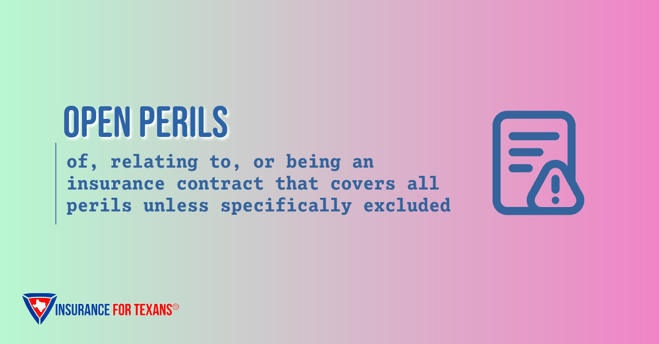
Simply put, open perils coverage means your insurance policy protects you against any cause of loss is a covered peril unless that cause is specifically excluded in the policy language. This definition applies only to property insurance and not casualty (liability) insurance.
There's a big difference between open peril coverage and a named perils policy.
Instead of only covering risks that are individually listed, an open perils policy starts from the position that your property is covered first. The insurance company must then point to a specific exclusion if a claim is denied.
For Texas home and business owners, that broader protection can make a world of difference.
Imagine a powerful hailstorm rolls through on a spring evening and damages your roof, windows, and signage. Or a sudden pipe burst floods your office, restaurant, or family room overnight. With open perils coverage, these causes of loss are generally covered by your homeowners policy or business owner's policy unless clearly excluded.
That means fewer gray areas and more peace of mind.
Why Does Having An Open Perils Policy Matter?
Life in Texas brings its own unique risks.
High winds, hail, falling objects, accidental fires, sudden plumbing failures, and severe weather can create major financial setbacks in a matter of minutes.
For homeowners, open perils coverage home insurance helps protect the structure of your home and, depending on the policy, your personal property from sudden and accidental losses.
For business owners, property insurance can help safeguard your building, equipment, inventory, and office space from costly interruptions due to property damage.
The real value is simple: broader protection for covered property.
Instead of wondering whether a specific event appears on a long list of covered perils, open peril coverage offers stronger confidence that your policy is built to respond when your home or small business needs it most.
What Do Open Peril Policies Not Cover?
Now, let’s be clear.
Open perils does not mean no coverage limits.
Every policy still includes exclusions. Your insurance provider will commonly exclude:
- water damage from floods, sewer backup or water backup
- earthquake losses
- damage or loss due to wear and tear
- neglect or deferred maintenance causes of losses
- mold caused by long-term leaks
- intentional damage
This is where many Texas property owners get caught off guard.
For example, storm-related roof damage may be covered, but age-related deterioration often is not. That distinction can leave a significant financial gap if your roof has depreciation built into the claim settlement.
That’s why reviewing the details of your insurance policy is so important.
How Do I Make Sure My Coverage Works When it Counts?
Insurance should do more than check a box.
It should protect what you’ve worked hard to build.
Whether you own a home in Texas and have a homeowners insurance policy, manage a commercial property, or operate a growing small business, understanding whether you have open perils or named peril coverage can help you avoid costly surprises later.
The best time to find coverage gaps is before a claim happens.
If you’re not sure how your current policy responds to roof damage, water loss, storm claims, or liability exposures, now is the time to review it. Open peril coverage vs named peril coverage determines how causes of loss are covered by your insurance policy.
Contact us today for a complimentary insurance policy review and let’s make sure your home or small business is protected with coverage that works when life takes an unexpected turn.