
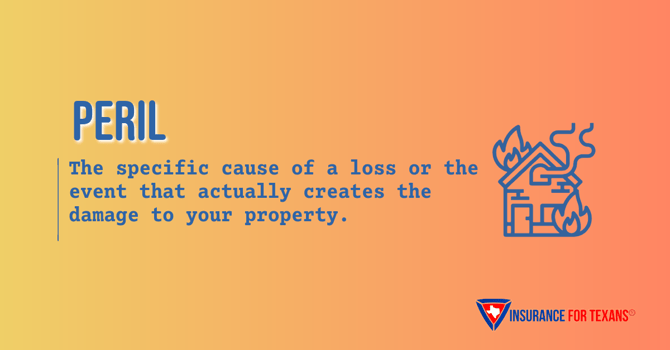
In the insurance world, it is the bad thing that happens. It includes events like a fire, a hailstorm, or a theft. To have a successful insurance claim, the damage must be caused by a peril that your policy specifically agrees to cover.
The Midnight Crash in Amarillo
Marsha owns a quiet retail shop in Amarillo. Late one Tuesday night, a driver lost control of their vehicle on the icy access road and plowed straight through her front display window. As Marsha stood on the glass-covered sidewalk at 2:00 AM, she wasn't thinking about vocabulary. She was thinking about her inventory. But when she called her agent, the first thing they had to determine was the peril. Because vehicle impact was a covered peril in her commercial property policy, the process of rebuilding could start immediately.
The Foundation of Every Texas Policy
Marsha’s story highlights why the word peril is the most important term you’ve probably never used. In Texas, we live in a high-peril environment. We deal with some of the most diverse risks in the country, from coastal hurricanes to Panhandle wildfires and North Texas tornadoes. Every insurance policy is essentially a contract that lists which of these specific bad things the insurance company is willing to pay for. If you don't understand the perils listed in your policy, you’re essentially flying blind into the next storm season.
Common Perils in the Lone Star State
While every policy is different, most Texas home and business policies cover a standard set of perils. These typically include:
- Fire and Lightning: The most common catastrophic perils.
- Windstorm and Hail: The frequent flyers of Texas property damage.
- Theft and Vandalism: Protection against intentional acts by others.
- Explosion: Whether from a gas leak or a commercial accident.
- Water Damage: Usually limited to sudden and accidental events like a pipe bursting.
Understanding Open vs Named Perils
The way your policy treats perils determines how much protection you truly have.
- Named Perils: Your policy only covers a specific list of perils.
- Open Perils: This covers everything unless the policy specifically says it doesn't.
What Perils Are Typically Excluded?
It is just as important to know what is not a covered peril. In Texas, insurance companies almost always exclude certain events unless you buy extra coverage. Common excluded perils include floods, earthquakes, and wear and tear. If the peril that damaged your home was a slow leak that happened over three years, most insurance companies won't consider that a covered event.
Know Your Risks Before They Strike
Understanding perils is about knowing how your home or business is protected from things that cause damage to your property. You shouldn't have to wait for a disaster to find out that flood or earth movement wasn't part of your policy.
Are you covered for the risks you actually face? Texas weather doesn't play by the rules, and your insurance shouldn't be a guessing game. Our personalized risk assessment looks at the specific perils your property is exposed to, ensuring your policy is a real shield, not just a piece of paper.