
This could be anything from a chronic illness like diabetes or asthma to a previous surgery or even a recent pregnancy. In the world of Texas health insurance, how these conditions are handled depends entirely on the type of plan you choose. While the rules changed significantly with the Affordable Care Act (ACA), pre-existing conditions remain a major factor in determining which plans will actually protect you.
The Expensive Mistake
Mark is a consultant in Grapevine. Last year, he decided to leave his corporate job and strike out on his own. Since health insurance is usually tied to employment, Mark needed to find his own health insurance since he was now an entrepreneur and not an employee. He found a low-cost short-term health plan online that looked like a great deal. Three months later, Mark had to be hospitalized for complications related to a heart condition he’d managed for years.
When the bills arrived, the insurance company denied all of the claims. The plan Mark chose was not an ACA-compliant policy and therefore did not cover his pre-existing condition. Since his heart condition existed before he bought the plan, the company exercised their right to exclude it from coverage. Mark was left with a $40,000 bill because of a health plan that did not meet his needs.
The Two Worlds of Texas Health Coverage
In Texas, health plans generally fall into two categories when it comes to your medical history:
1. ACA-Compliant Plans (Major Medical)
These plans can be either an HMO plan or a PPO plan (like those found on the health insurance exchange or through large employers) are legally prohibited from denying you coverage or charging you more based on your health history.
- Guaranteed Issue: They must take you, regardless of your history.
- Full Coverage: They must cover treatments for your pre-existing conditions from day one.
- No Price Hikes: Your premium is based on age and location, not your medical charts.
2. Non-ACA Plans (Short-Term or Limited Benefit Indemnity Plans)
These plans are often much cheaper, but they play by different rules.
- Medical Underwriting: They will ask you a series of health questions before approving you.
- Exclusions: They can, and often do, refuse to cover any pre-existing issues for a set period of time or even forever.
- Denials: They can flat-out refuse to sell you a policy if they deem your history too risky.
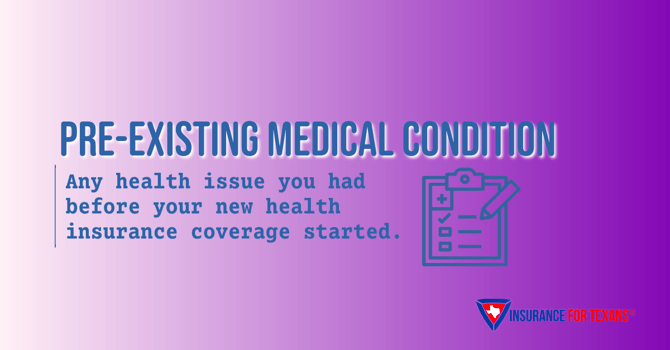
What Counts as a Pre-existing Condition?
Insurance companies look at your medical records for a specific look-back period (which can be up to several years). They are looking for:
- Advice or Treatment: Did a doctor recommend a surgery or prescribe a med?
- Symptoms: Did you have symptoms that would cause a reasonable person to seek medical help?
- Chronic History: Conditions like high blood pressure, cancer in remission, or COPD are almost always considered pre-existing.
The Waiting Period
Even if a plan agrees to take you, some Texas policies include a waiting period. This means the plan won't pay for expenses related to your pre-existing condition for a certain amount of time (like 6 or 12 months) after the policy starts. If you have a condition that requires regular medication or therapy, you could be paying for those entirely out of pocket during that window.
Choose a Plan That Actually Fits Your History
A cheap insurance plan is the most expensive mistake you can make if it doesn't cover the one thing you actually need medical help for. You have to be honest about your health history to ensure you aren't buying a policy that is legally allowed to walk away when you file a claim.
Are you betting against your own medical history? Most people don't read the exclusions page until they get a denial letter. Our personalized risk assessment looks at your health needs and compares them against the fine print of Texas plans to make sure your pre-existing conditions are covered.