
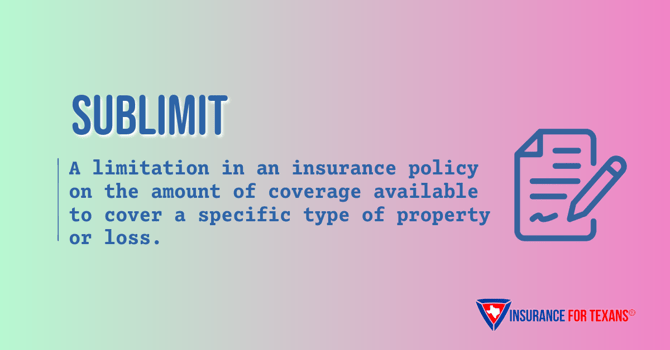
An insurance sublimit is a secondary cap on your coverage that restricts how much you can collect for specific types of property or causes of loss. Even if your main policy limit is $500,000, a sub-limit will cap your payout for a high-value item. Items like jewelry or specialized tools are often capped at just $2,500.
The $22,500 Surprise in Denton
David runs a high-end carpentry shop in Denton. Over the years, he’s invested $25,000 in specialized German-engineered power tools. His commercial property policy showed $100,000 in total contents coverage. With such a high limit, David felt like his investment was safe behind a fortress. But after a thief cleared out his tool wall one night, David received a gut-punch from his adjuster. Buried in the fine print was a theft of tools sublimit capped at just $2,500. Instead of receiving enough money to get back to work, David only got enough money to buy one saw. The other $22,500 of the loss came directly out of his own pocket.
Don’t Get Caught Unprepared
David’s story is a classic example of the sublimit trap. In the insurance world, companies use these caps to control their risk on items that are easy to steal or hard to value. The problem for Texas home and business owners is that these internal ceilings are often set at 1980s prices. Whether it’s an engagement ring in a Plano suburb or specialized inventory in a Houston warehouse, many Texans are walking around partially insured without even knowing it.
What Are Common Sub-limits?
In both home and commercial property insurance, sublimits are everywhere. Here are the most common ones we see:
- Homeowners: Most standard home insurance policies cap theft of jewelry at $1,500, cash at $200, and firearms or silverware at around $2,500. If your wedding ring is worth $10,000, you have a massive gap.
- Business Owners: Commercial plans frequently place caps on outdoor signs, valuable papers, and contractor’s equipment. For churches, there are sublimits on musical instruments, sound systems and stained glass windows.
- Peril-Specific: Sometimes the cap isn't on the item, but the event. You might have $1 million in liability coverage, but a sub-limit that caps a mold or fungus claim at a mere $25,000.
How to Break Through the Ceiling
The good news is that a sub-limit doesn't have to be the final word. Once you identify a cap that is too low, you have several ways to fix it:
- Scheduled Personal Property: For homeowners, you can schedule high-value items like jewelry or fine art separately. This ensures they are covered for their full appraised value, not a fraction of it.
- Inland Marine Endorsements: For business owners, adding a floater policy protects your mobile equipment for its full replacement cost without the sting of a sub-limit.
- Policy Endorsements: Often, you can simply pay a small additional premium to buy up a specific sub-limit to a more realistic number.
Stop Paying for Protection You Can’t Use
Discovering a sub-limit during an insurance claim is a financial nightmare. If you own specialized equipment, expensive jewelry, or high-value inventory, there is a high probability that your current policy has a hidden cap leaving you exposed. You don’t want to find out about a $2,500 limit when you’re staring at a $25,000 loss.
Is your most valuable gear actually covered? Don’t let a hidden cap stand between you and your recovery. Our personalized risk assessment is designed to hunt down these sub-limits and make sure your assets are fully protected.