
In exchange for providing these benefits, Texas employers generally receive exclusive remedy protection, which means employees typically cannot sue the business for the injury. It is the essential safety net that protects both the person doing the work and the company providing the paycheck.
The Slip in the Stockroom in Sugar Land
Robert owns a busy retail distribution center in Sugar Land. He’s always prioritized safety, but during the holiday rush, a seasoned floor supervisor slipped on a stray piece of plastic wrap and suffered a complex back injury. The medical bills climbed to $45,000 in the first month, and the supervisor was unable to return to work for a year. Because Robert carried workers' comp, he didn't have to worry about the medical costs or the employee's lost income. The policy handled it all. More importantly, Robert didn't have to face a business-ending lawsuit over the accident.
There is A Choice in Texas
Robert’s story is a best-case scenario for a tough situation. Texas is unique because it is the only state where private employers can choose not to carry workers' compensation insurance. These businesses are called nonsubscribers. However, this choice comes with potential consequences. If a nonsubscriber is sued for a workplace injury, they lose almost all their legal defense protections in court. In a state with industries as physical as ours, from construction in Austin to oil fields in West Texas, going without this coverage is like walking a tightrope without a net. One accidental fall can result in a jury award that wipes out decades of hard work.
What Does Workers' Comp Actually Cover?
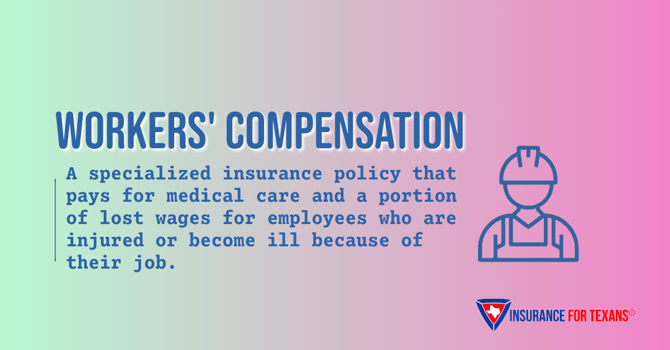
In Texas, a standard Workers' Compensation policy provides four main types of benefits:
- Medical Benefits: Pays for all reasonable and necessary medical care related to the work injury.
- Income Benefits: Replaces a portion of the wages the employee loses because of their injury.
- Death Benefits: Provides financial support to the family of an employee who loses their life on the job.
- Burial Benefits: Covers the costs associated with funeral arrangements.
Why Occupational Accident Policies Aren't the Same
Many Texas business owners are pitched occupational accident plans as a cheaper alternative. While these plans pay some medical bills, they do not provide the exclusive remedy legal protection that workers' comp does. If you have an occ-acc policy and get sued, you are still legally exposed. Only a true Texas workers' compensation policy provides the statutory immunity that prevents an injured employee from suing you for anything except gross negligence.
Protect Your Team and Your Assets
Your employees are your most valuable resource, but a workplace injury is your biggest unpredictable liability. Workers' comp is a promise to your team that they will be cared for, and a promise to yourself that your business will survive the accident.
Are you operating without a safety net? Many nonsubscribers don't realize how much they are risking until a lawyer calls. Our personalized risk assessment looks at your payroll and industry class codes to find a plan that protects your staff and your bottom line.